
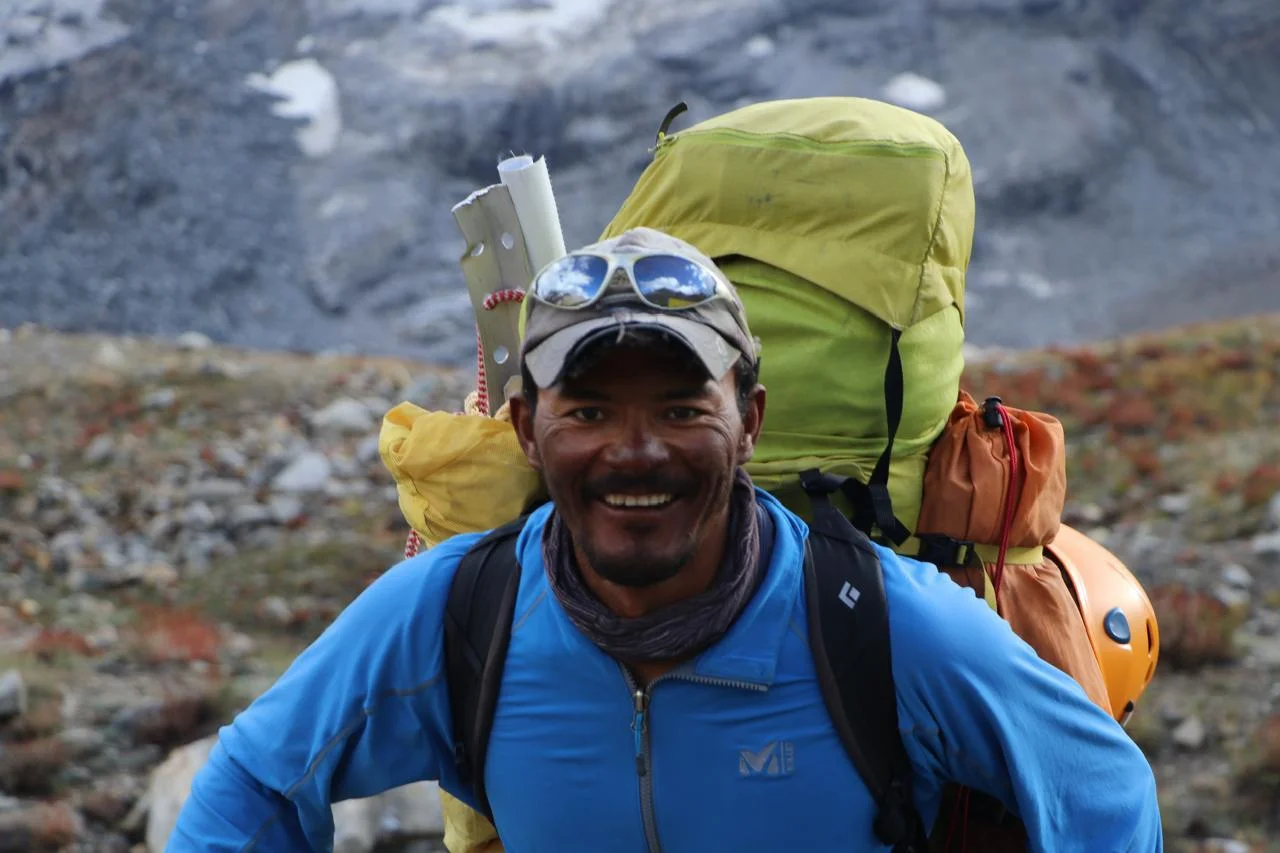
Skalzang Rigzin: From a Trekking Helper in Ladakh to the Summit of Everest Without Oxygen
The inspiring journey of a Ladakhi mountaineer who began as a trekking helper and went on to climb some of the world’s highest mountains without supplementary oxygen.
For Skalzang Rigzin, the mountains have never been just a place to climb. They have been his workplace, his classroom, and a part of his life for nearly three decades. Long before he stood on the summit of Mount Everest, he was a young boy from Ladakh earning a living by helping trekking groups in the Himalayas.
His journey did not begin with dreams of breaking mountaineering records or standing on the world’s highest summit. It began with simple work, carrying equipment, washing dishes, pitching tents, and learning from the people around him.
Over the years, those small beginnings shaped him into one of Ladakh’s most accomplished high-altitude mountaineers.
On 23 May 2024, Skalzang Rigzin reached the summit of Mount Everest without supplementary oxygen, adding another remarkable achievement to a climbing career that had already taken him to the summits of Annapurna and Lhotse.
But behind these achievements is a much longer story, one of hard work, patience, experience, and a deep respect for the mountains.
THREE SUMMITS · WITHOUT SUPPLEMENTARY OXYGEN
Annapurna I
8,091 m · 28 April 2022
Lhotse
8,516 m · 14 May 2022
Everest
8,848.86 m · 23 May 2024
Growing Up in Ladakh
Skalzang Rigzin was born on 10 November 1981 and comes from Tia village in the Sham region of Ladakh. His family later moved to Leh, where he spent much of his childhood.
Growing up in Ladakh meant living close to the mountains. The surrounding landscape, with its high passes, rugged valleys, and snow-covered peaks, was part of everyday life.
Like many young people in Ladakh, Rigzin entered the trekking industry at an early age. In 1996, he joined his first trekking expedition as a helper.
His responsibilities were ordinary but demanding. He helped prepare camps, washed utensils, carried loads, and assisted the expedition team wherever needed.
At the time, mountaineering was not necessarily a career he had imagined for himself. He was simply working and learning.
Yet those early expeditions introduced him to a world that would eventually become his life’s work.
Learning the Mountains, One Expedition at a Time
Rigzin’s journey from trekking helper to professional mountain guide happened gradually.
During his early years, he worked alongside experienced guides, climbers, and expedition leaders. Every journey brought something new to learn, whether it was managing camps at altitude, understanding the weather, crossing difficult terrain, or working safely with a team.
As his experience grew, so did his responsibilities.
He began developing the technical skills needed for climbing and eventually undertook formal mountaineering and rescue training to strengthen his knowledge.
By the late 1990s, he was establishing himself in the guiding profession.
Over the following years, Rigzin participated in expeditions across Ladakh, the Himalayas, and the Karakoram. He gained experience on mountains such as Rimo IV, Arganglas, Padmanabh, and other challenging peaks.
These expeditions helped him develop the judgment and confidence that come only from spending many seasons in difficult mountain environments.
For a professional mountain guide, reaching the summit is only one part of the responsibility. Getting the team safely through the journey, making decisions in difficult conditions, and knowing when to turn back are equally important.
Such lessons would later become essential during his climbs above 8,000 metres.
For a professional mountain guide, reaching the summit is only one part of the responsibility.
Annapurna: A New Chapter in His Mountaineering Journey
Although Rigzin had spent many years working in the mountains, climbing the world’s highest 8,000-metre peaks was not initially part of a carefully planned ambition.
An opportunity to join an expedition to Annapurna changed that.
According to an interview published by Namoh Expedition, Rigzin was invited to join the Annapurna expedition through a friend associated with Boots & Crampons.
Annapurna, standing at 8,091 metres in Nepal, is known for its difficult terrain, avalanche danger, and unpredictable weather. Even experienced mountaineers approach the mountain with caution.
During the expedition, Rigzin met other accomplished high-altitude climbers. Conversations with them encouraged him to consider attempting the mountain without supplementary oxygen.
It was a serious decision. Above 8,000 metres, the body struggles to function with the reduced availability of oxygen. Even simple movements become exhausting, and every decision can carry significant consequences.
On 28 April 2022, Rigzin successfully reached the summit of Annapurna without supplementary oxygen.
It was a major achievement, but the expedition also gave him one of the most difficult experiences of his climbing career.
During the descent, bad weather and poor visibility created a dangerous situation. The climbers struggled to find the correct route while dealing with exhaustion at extreme altitude.
The experience was a reminder of how quickly conditions can change in the high mountains.
For Rigzin, Annapurna was not only about reaching a new altitude. It also reinforced the importance of patience, teamwork, and making careful decisions when circumstances become uncertain.
Lhotse: Another Summit Just Sixteen Days Later
After Annapurna, Rigzin’s next major achievement came remarkably quickly.
On 14 May 2022, just sixteen days after his Annapurna summit, he reached the top of Lhotse, the world’s fourth-highest mountain at 8,516 metres.
Once again, he climbed without supplementary oxygen.
Attempting two 8,000-metre mountains within such a short period is physically demanding. The body needs time to recover from extreme altitude, and every expedition brings its own challenges.
Yet Rigzin’s years of climbing and guiding experience had prepared him for difficult conditions.
His ascents of Annapurna and Lhotse marked an important stage in his career. They also brought greater attention to a Ladakhi mountaineer who had spent much of his life working quietly in the mountains.
For the local guiding community, his success was an encouraging example of what experienced mountain professionals from Ladakh could achieve on the world’s highest peaks.
Everest 2024: A Dream Reached Without Supplementary Oxygen
On 23 May 2024, Skalzang Rigzin stood on the summit of Mount Everest, 8,848.86 metres above sea level.
He had reached the highest point on Earth without using supplementary oxygen.
For someone who began his career as a trekking helper, it was an extraordinary moment.
Climbing Everest is physically and mentally demanding even with bottled oxygen. Without it, the body must cope with severe oxygen deprivation, extreme cold, exhaustion, and the effects of prolonged exposure to high altitude.
Every movement requires concentration. Progress can be painfully slow, and the margin for error becomes very small.
Rigzin’s approach was shaped by the experience he had accumulated over nearly thirty years in the mountains.
Rather than focusing only on the summit, he concentrated on moving steadily and taking the climb one section at a time.
At approximately 3:40 in the morning, he reached the top of Everest.
In interviews after his ascent, Rigzin spoke about the emotions of reaching the summit and his gratitude toward the mountain and the people who had supported him.
It was a deeply personal achievement, but it also carried special meaning for Ladakh.
A mountain guide who had begun with the most basic expedition duties had reached the highest summit in the world through years of experience, determination, and commitment.
A Life Built Around the Mountains
What makes Skalzang Rigzin’s journey particularly meaningful is the way his career developed.
He did not enter mountaineering through a single major expedition or a sudden opportunity for recognition. His experience was built over many years of work.
He learned the mountains by walking their trails, carrying loads, establishing camps, handling difficult conditions, and taking responsibility for people on expeditions.
The knowledge gained through these experiences cannot easily be replaced by training alone.
It develops through repeated exposure to different situations, from changing weather to challenging terrain and unexpected problems.
Rigzin’s story also reflects the lives of many mountain guides in Ladakh and across the Himalayas.
Behind every successful expedition are people whose work often goes unnoticed: trekking helpers, cooks, porters, climbing guides, and logistical teams.
They prepare routes, transport equipment, manage camps, and support climbers through some of the most demanding environments in the world.
Rigzin began his career as one of those workers.
His achievements are therefore not only a reflection of personal ambition but also a reminder of the knowledge and skill that exist within local mountain communities.
Giving Back to the Mountaineering Community
Alongside his climbing career, Rigzin has remained connected to the mountain guiding community in Ladakh.
He has served as president of the Ladakh Mountain Guide Association, an organization representing professional mountain guides in the region.
Ladakh has long attracted trekkers and mountaineers from around the world. Its mountains offer everything from relatively accessible trekking routes to remote technical expeditions in the Himalayas and Karakoram.
However, building a professional guiding career in the region takes time, training, resources, and access to opportunities.
Experienced guides such as Rigzin play an important role in demonstrating the value of local mountain knowledge and professional skills.
His journey shows younger climbers that mountaineering is a profession requiring responsibility, discipline, technical ability, and continuous learning.
It is not simply about reaching summits.
Respecting the Mountains
Having spent much of his life climbing, Rigzin understands both the beauty and uncertainty of the mountains.
In his published interviews, he has spoken about maintaining patience during difficult climbs and concentrating on small goals when conditions become overwhelming.
His Buddhist faith and personal beliefs also influence the way he approaches the mountains, with gratitude and humility.
For experienced mountaineers, confidence must always be balanced with caution.
A mountain may be familiar, but the conditions are never exactly the same. Weather changes, snow conditions vary, and even the most experienced climber must remain alert.
Rigzin’s experiences, particularly during the difficult descent from Annapurna, show why reaching a summit should never be considered more important than returning safely.
His long career is a reminder that the mountains demand respect, regardless of how many times a person has climbed them.
Recognition for a Remarkable Career
Over the years, Skalzang Rigzin’s contributions to mountaineering have received recognition.
In 2017, he was awarded the Jagdish Nanavati Garud Medal by the Himalayan Club.
He later received the Indian Mountaineering Foundation Gold Medal in 2024, recognizing his achievements in high-altitude mountaineering.
His successful ascents and contributions to the sport also earned him the Tenzing Norgay National Adventure Award 2024.
These honors recognize an exceptional climbing career, but they represent only a small part of the story.
The greater achievement lies in the decades of work that made those summits possible.
An Inspiration for Young Mountaineers in Ladakh
For young people in Ladakh who dream of becoming mountain guides or mountaineers, Skalzang Rigzin’s journey offers an important lesson.
He started without the recognition that comes with climbing famous mountains. His first experiences were ordinary working days on trekking expeditions.
He learned from experienced people, developed his skills, pursued training, and continued working in the mountains year after year.
Only much later did his journey take him to the summits of Annapurna, Lhotse, and Everest.
His story shows that there is no shortcut to becoming an experienced mountaineer.
Physical fitness is important, but so are patience, technical knowledge, good judgment, and the willingness to continue learning.
For those beginning their careers in the mountains, his experience is a reminder that even the simplest responsibilities can become the foundation of something much greater.
Beyond the Summit
When people hear about Skalzang Rigzin, they may first remember his ascent of Mount Everest without supplementary oxygen.
But his story began long before Everest.
It began in Ladakh, with a young boy working on trekking expeditions, learning the mountains through everyday responsibilities, and gradually finding his place in the mountaineering world.
From those early days to the summits of three of the world’s highest mountains, his journey has been shaped by hard work, experience, and determination.
Today, his achievements stand as an important chapter in Ladakh’s mountaineering history.
For the people who know the mountains as home, workplace, and a source of livelihood, his journey carries a message that goes beyond climbing.
Great achievements do not always begin with great ambitions. Sometimes they begin with simply taking the first opportunity, doing the work well, and continuing to learn.
And for Skalzang Rigzin, that journey has taken him from the mountain trails of Ladakh to the very top of the world.
Sources & References
This biography was independently researched and written by MountainGuide.in using published interviews, mountaineering records and reports documenting Skalzang Rigzin’s career and achievements.
- Namoh Expedition – Skalzang Rigzin: Everest Without Oxygen — His personal journey, climbing experiences, and reflections on mountaineering.
- Ladakh Mountain Guide Association – Skalzang Rigzin — Professional background, qualifications, and guiding experience.
- Mint Lounge – Everest Without Oxygen — Reporting on his Everest ascent without supplementary oxygen.
MountainGuide.in — People. Peaks. Stories.